Dwarka Expressway (NH-248-BB) is emerging as one of Gurgaon’s hottest property corridors. Over the past 5 years prices have soared, driven by new supply and infrastructure. Industry reports note that the average rate here is already in the mid-₹10,000s per sqft – roughly double 2019 levels. For example, Sobha Ltd. reports prices climbed from about ₹9,434/sqft in 2020 to ₹18,668 in 2024 (nearly 100% growth). An Anarock analysis similarly finds the average at ~₹9,600/sqft in early 2024, up ≈83% since 2018. Realty+ magazine confirms a 3.5× jump in 2020–2025. This rapid appreciation – far outpacing older Gurgaon markets – reflects strong demand from buyers, NRIs and investors alike.
Going forward, most forecasts are bullish. Colliers International lists Dwarka Expressway among Gurugram’s top micro-markets, projecting ~1.0–1.6× price growth by 2030. Analysts expect continued double-digit gains in prime areas. For example, Ganga Realty forecasts Gurgaon mid-segment housing to grow ~5–7% per year and luxury homes ~8–12% through 2030. Given the corridor’s early stage, some sectors may even outperform these averages. In short, Dwarka Expressway remains a high-growth investment destination as the city’s next major urban spine.

Recent Price Trends and Supply
The Dwarka Expressway corridor has seen exceptional growth since 2018. An Anarock report highlights that the micro-market saw over 26,800 units launched since 2018 (≈23% of all Gurgaon supply). Available inventory is moderate: roughly 8,800 units on market (about 19% completed and 81% under construction). Crucially, average values have more than doubled. In 2019 the average was only ~₹5,360/sqft; by 2024 it reached ~₹11,000. Realty+ confirms a 3.5-fold surge from 2020 through 2025. In just four years (2020–24), the average jumped from ~₹9,434 to ₹18,668. This makes Dwarka Expressway one of NCR’s fastest-appreciating markets.
Several factors underlie this rise. Supply has shifted upscale: whereas 2019–21 new launches were largely budget apartments, the 2022–24 wave has been dominated by premium and luxury projects (91% of recent supply is ₹1.5–5+Cr homes). Meanwhile, buyers have flooded in ahead of anticipated connectivity improvements. In short, strong absorption and limited stock (especially ready-to-move luxury units) have pushed prices up sharply. As one developer puts it, Dwarka Expressway’s “transformative infrastructure upgrades and expanding connectivity have reinforced its position as a high-potential real estate destination”.

Key Infrastructure Catalysts
Dwarka Expressway’s future growth hinges on numerous infrastructure projects, all of which will boost property values. Key catalysts include:
-
Expressway Completion (2025): The 29-km Dwarka Expressway itself is nearly done. Full completion – including all underpasses, flyovers and cloverleaf junctions – is expected by late 2025. This 16-lane controlled corridor will finally provide a seamless Delhi–Gurgaon link, slashing commute times.
-
Metro Connectivity: New metro lines are planned to serve the corridor. In Delhi, Phase-4 of the Blue Line (Janakpuri–Dwarka–Najafgarh) is under construction. Additionally, a proposed extension from Dwarka Sector 21 into Gurugram’s Dwarka Expressway sectors is on the drawing board. These will integrate Dwarka Exp with Delhi Metro and the upcoming Rapid Metro.
-
Yashobhoomi (IICC): The India International Convention & Expo Centre in Dwarka (Yashobhoomi) opened in 2023 near IGI Airport. It directly links to Dwarka Expressway via the new Urban Extension Road and planned connectors. Having a world-class convention center nearby is expected to boost business travel demand for high-end housing and hotels.
-
Diplomatic Enclave: A new Diplomatic Enclave (planned for Sector 24, Dwarka Phase 5) will host foreign embassies. Sobha Ltd. highlights Dwarka Exp’s “proximity to the upcoming Diplomatic Enclave” as a selling point, further elevating the area’s prestige and security.
-
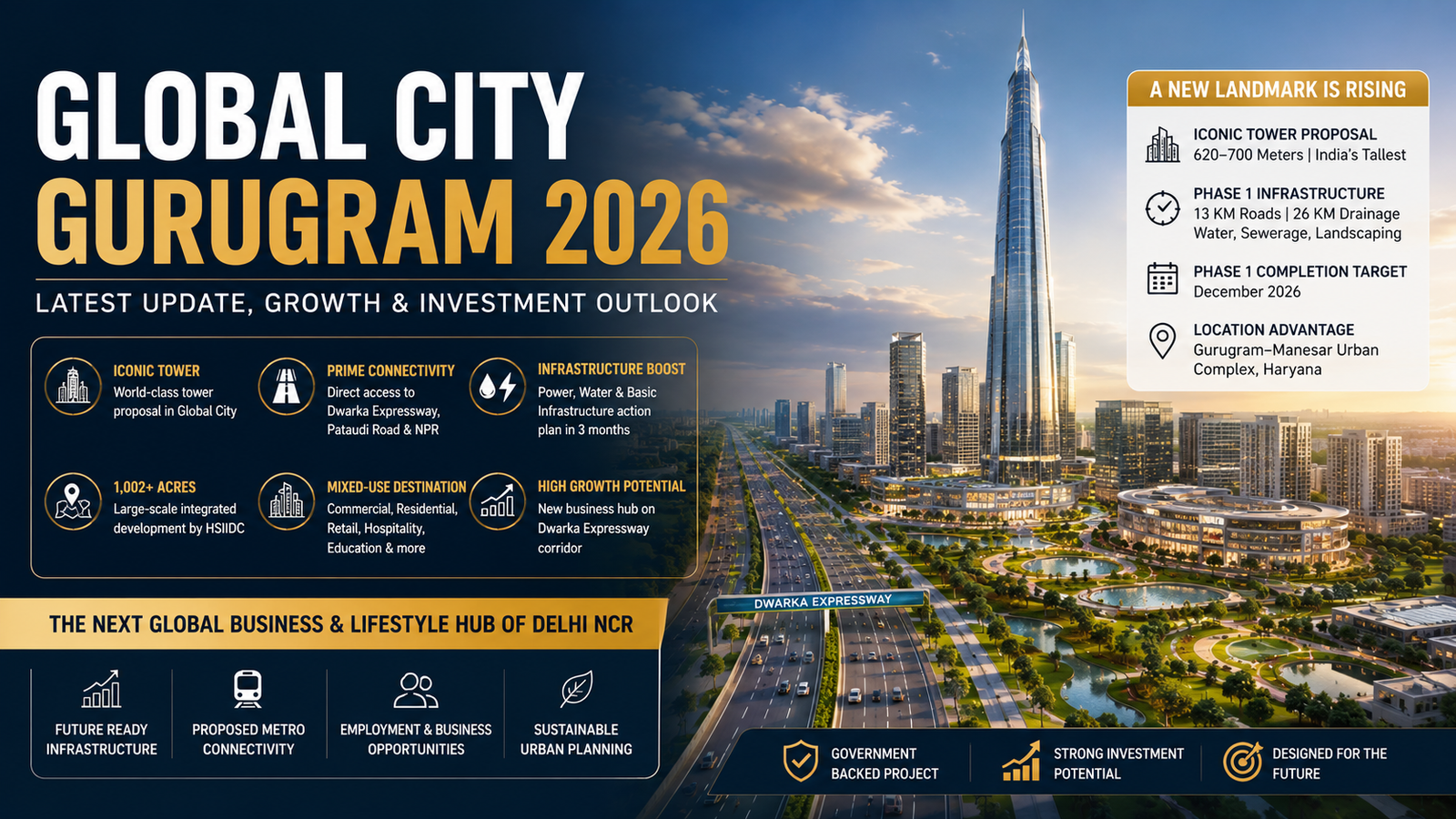
Global City Gurgaon: Government plans envision a massive 1,000-acre “Global City” near Sector 37D, with mixed residential, commercial and office space. This upcoming township will attract corporate campuses and premium housing, lifting surrounding land values.
-
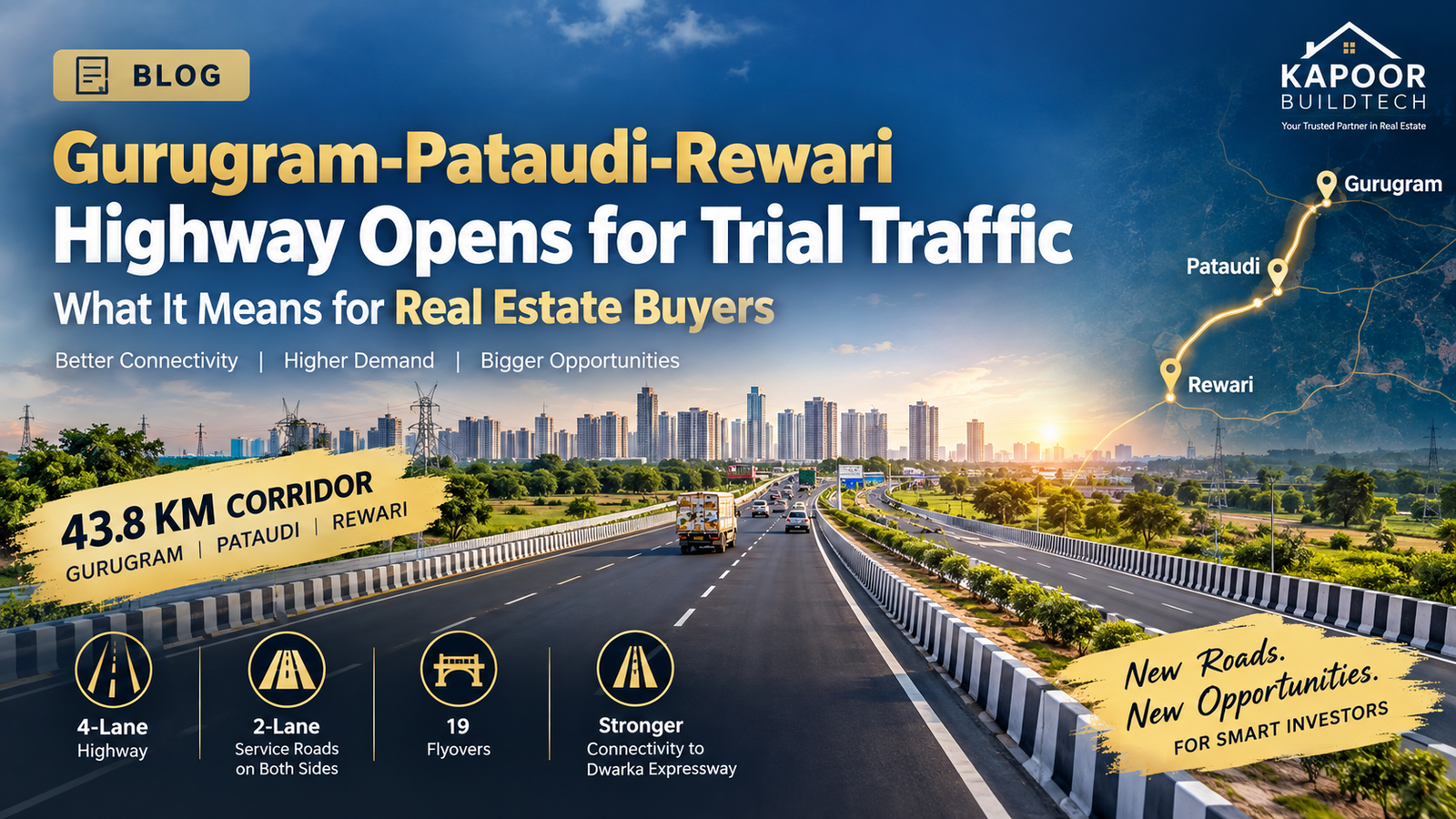
Other Road Links: The corridor benefits from additional highways and expressways. The newly opened Urban Extension Road-II (UE-II) connects Dwarka Exp to NH-8 and NH-19. Delhi–Mumbai Expressway (in the same DMIC project) and Jaipur-Ludhiana highway also improve regional connectivity. Nearby, the upgraded Bijwasan railway station and forthcoming sectoral helipad are further infrastructure enhancements noted by Realty+.
Each of these developments reduces travel friction and unlocks new demand. Collectively, they explain why experts repeatedly cite infrastructure as the driving force behind Dwarka Expressway’s runaway growth. In short, each new bridge, flyover or Metro stop directly feeds through into higher home values on the corridor.
Sector-Wise Price Snapshot (Current Rates and Growth)
The Dwarka Expressway belt spans several Gurugram sectors (roughly 102–113, plus adjacent Sector 37D). Current prices and growth prospects vary by sector:
-
Sectors 102-103: These are early-stage, rapidly developing areas on the northern end. Average rates are around ₹13,000–₹14,000/sqft. Planned road widenings and new projects mean strong upside – Sobha calls these “rapidly evolving growth hotspots”. Prices here have ample room to catch up as basic infrastructure arrives.
-
Sector 104: Directly abutting the expressway, Sector 104 has avg. price ≈₹11,300/sqft. Connectivity is excellent (just off NH8/Dwarka link), so this sector’s price trajectory has been upward. High-quality projects (e.g. ATS Triumph) have already anchored values. Continued development of retail and amenities here should support a steady ~10–15% annual rise.
-
Sector 106: A premium node hosting Sobha Altus and other luxury towers. Average rates are about ₹15,980/sqft – among the highest in the corridor. Sector 106’s advantage is proximity to IGI Airport and the future Diplomatic Enclave. With several ultra-luxury projects underway, prices here will likely grow slower percentage-wise (the base is already high) but still outpace city averages. Luxury demand means 7–10% annual gains are plausible as projects complete.
-
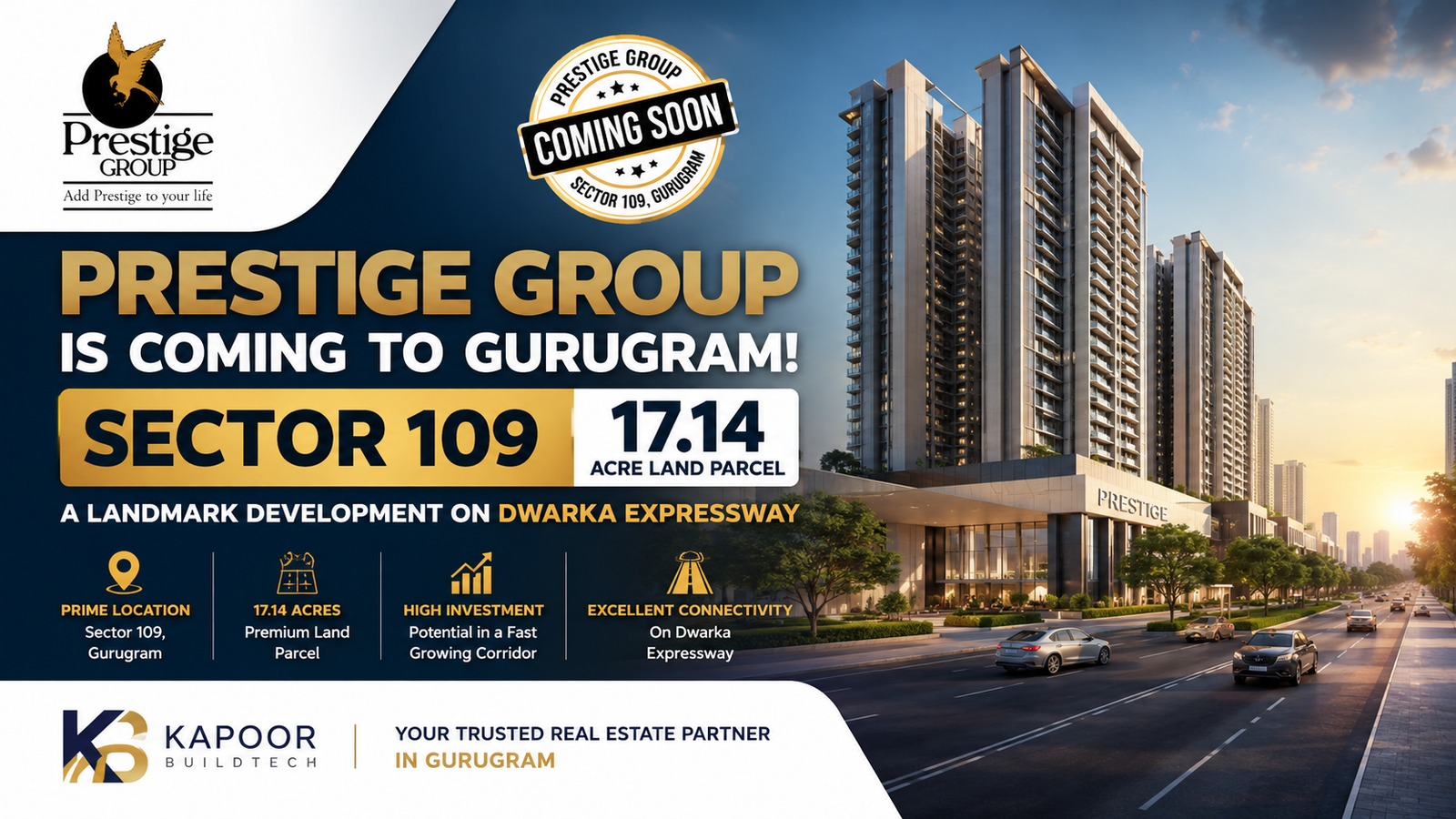
Sector 109: Known for Sobha City and ATS Tourmaline, Sector 109 commands extremely high prices (~₹27,100/sqft on average). This is the corridor’s luxury premium zone. While absolute gains (₹/sqft) may be big, percentage growth may moderate as compared to cheaper sectors. Nevertheless, with ongoing premium launches and ready stock scarcity, prices are expected to keep rising in the 8–12% range yearly.
-
Sector 113: Home to large high-rise complexes (such as Smart World One DXP), Sector 113 has mid-high pricing (~₹16,562/sqft avg). It is very active with both mid-tier and premium projects. Housing.com notes a slight recent pullback in 113, but long-term fundamentals remain strong. Given ongoing lifestyle developments (schools, malls) in this sector, moderate growth (5–10% p.a.) is likely.
-
Sector 99A: At the Gurgaon end near Sohna Road, Sector 99A (also part of the Dwarka Expressway submarket) is more affordable, with average prices ≈₹11,900/sqft. It has good road links and an upcoming Metro station. Sobha calls 99A “an entry point for first-time buyers and investors”. This sector may see some of the strongest price jumps (often 15–20%+ annually) as it matures, because its base prices are much lower than the central sectors.
Overall, all these sectors stand to gain from the same connectivity tailwinds – Dwarka Expressway is their shared boon. The relative growth potential differs: early-stage sectors (102–104, 99A) offer higher upside percentages, while established luxury pockets (106, 109) offer steady appreciation on a high base.
Notable Projects by Leading Developers
The corridor features a mix of ready-to-move and under-construction projects from top builders. Highlighted developments include:
-
Sobha Altus (Sector 106): Ultra-luxury high-rise with 4–5BHK apartments. It is under development and exemplifies the top end of the market.
-
Sobha City (Sector 109): A large gated community with villas and apartments, delivered phase by phase. It is mostly ready-to-move, commanding ₹80L–3Cr for 3-5BHK units.
-
ATS Triumph (Sector 104): A premium 3/4BHK high-rise complex. This project is ready-to-occupy, reflecting ATS’s reputation for timely delivery.
-
ATS Tourmaline (Sector 109): Another luxury 3/4BHK development (by ATS Greens) under construction, enhancing Sector 109’s portfolio.
-
M3M Elie Saab (Sector 111): A forthcoming ultra-luxury project in partnership with the Elie Saab brand. It has 3-4BHK apartments and is eagerly awaited.
-
Smart World One DXP (Sector 113): A premium project by Smart World (often in collaboration with M3M). It’s under construction with 3-4BHK apartments targeting upper-mid buyers.
-
Signature Global DXP Estate (Sector 37D): A massive township spread over ~100 acres. Signature’s project is already unveiling new phases; it’s billed as a luxury “wellness-centric” development.
-
Signature Millennia (Sector 37D/99A): Affordable housing cluster (under PMAY scheme) by Signature, attracting first-time buyers.
-
Godrej Vrikshya (Sector 103): A premium 3-4BHK project by Godrej, offering modern apartments in the mid-luxury segment.
-
Shapoorji Joyville Gurugram-II (Sector 102): A mid-market township by Shapoorji Pallonji. It has 2-3BHK units in the affordable-to-mid range and is RERA-registered.
-
TARC Ishva (Sector 63A): A high-end “four-sided open” 4BHK project by The Amar Rise City (TARC). It’s near the expressway and starts at ~₹10.5Cr for 4BHK, catering to ultra-wealthy end-users.
-
DLF, Vatika, and Other Builders: Developers like DLF, IREO, and Paramount also have gated communities (e.g. DLF Smart City, Azure by Vista, etc.) in the vicinity, typically in Sector 37D, further populating the premium sector.
These projects span the spectrum from ₹50L flats to ₹5Cr penthouses. Many are branded, RERA-compliant developments – a key factor for trust. Investors can choose ready assets (for immediate rent/occupancy) or book-launch projects for higher future gains. The presence of marquee names (Sobha, DLF, Godrej, etc.) boosts confidence and helps resale value.
Rental Yields and Investment Potential
Dwarka Expressway offers moderate rental returns. Anarock data shows typical rents around ₹10–15K/month for a 1BHK, ₹21–40K for 2BHK, and ₹35–70K for 3BHK. Given flat prices, this translates to roughly 3–4% rental yield in the mid-segment. In fact, consultants estimate Dwarka yields around 3–5%. (Affordable apartments may fetch slightly higher yields; large luxury homes yield less on % basis.)
For mid-budget homes (₹1.5–3Cr), well-located units can command decent rents, making them attractive to investor-buyers. The market is heavily weighted toward 3–4BHK apartments: Square Yards notes that 3-4BHK units in the ₹1.8–3.5Cr range are dominant. Young professionals and NRI families working in Delhi/Gurgaon are key tenants. Yields in this segment tend to hover around 3–4%.
Luxury homes (>₹5Cr) see lower rental yields (often 2–3%) because rents plateau while prices rise steeply. However, many HNIs buy high-end flats for self-use or long-term investment rather than immediate rent. For them, the draw is capital appreciation: Dwarka’s past 5-year gains have offset modest rents. In short, investors in Dwarka Expressway mainly expect price growth, with rental income as a secondary bonus.
Investor Outlook: With capital values already up ~3.5× in five years, opportunities now lie in buying ready/smooth projects before the next surge. Early movers in under-construction sectors (102–104, 99A) stand to gain the most as new amenities arrive. For NRIs and long-term holders, even a 3–4% rental yield combined with expected 10–15% annual price gains can be attractive. All sources caution that returns will be driven more by the corridor’s rapid growth story than by rental income alone.
Best Sectors for ROI and Livability
Putting it together, which sectors offer the best ROI and livability? Industry experts highlight both early-mover zones and premium clusters:
-
Early-Mover Sectors (102–104, 99A): These have relatively low prices today and significant infrastructure coming. Sobha calls Sectors 102–103 “rapidly evolving growth hotspots”. Sector 104 is already developed but still offers long-term gains thanks to expressway access. Sector 99A is emphasized as a strategic entry point – “good road connectivity and improving infrastructure” make it ideal for new investors. Buyers who enter these areas now (often with ₹50–70L 2BHK budgets) gain the largest capital growth as connectivity projects complete. Livability is improving with each passing quarter as schools, malls and metro make these sectors more self-sufficient.
-
Premium Sectors (106, 109, 113): While prices here are higher, these areas offer top-notch amenities and luxury living. Sector 106 (Sobha Altus) and 109 (Sobha City, ATS Tourmaline) boast 5-star features, making them preferred by affluent end-users. Sector 113 has many branded high-rises with ready social infrastructure. These sectors may have slower % growth than the under-developed zones (since their price base is high), but they provide the assurance of world-class facilities and resale demand. Investors here can expect steadier but solid returns.
-
Emerging Cluster (Sector 37D): Though outside the 102–113 range, Sector 37D (reached via NH8) is part of the broader growth area. With famous projects like Signature’s DXP Estate, it’s a nexus of development. Some investors view 37D/99A as an adjunct Dwarka corridor with excellent ROI potential.
In summary, for highest ROI, look to sectors 102–104 and 99A as early-bird zones. For best livability (amenities and prestige), sectors 106, 109 and 113 top the list. Many buyers hedge by combining: e.g. mid-rise in Sector 113 for a few years, then selling to buy a luxury unit in Sector 109/106, capturing appreciation along the way. The first-mover advantage on any new metro or flyover will further tilt the scales in favor of these emerging sectors.

Conclusion and Next Steps
Dwarka Expressway has indeed become a real estate powerhouse. In just a few years it has transformed from a peripheral road to a high-demand corridor, driven by its unbeatable connectivity and premium projects. All the ingredients point to continued growth through 2030: a completed expressway, multiple metro lines, proximity to Delhi and the airport, plus landmark developments like Yashobhoomi and the Diplomatic Enclave. Historical price trends – roughly doubling every 4–5 years – suggest significant upside remains.
For investors and homebuyers seeking Gurgaon’s next big opportunity, Dwarka Expressway stands out. Whether you target mid-segment apartments (₹1.5–3Cr) for strong demand and ~3–4% yields, or luxury villas/flats (₹4–8Cr+) for capital appreciation and world-class living, this corridor delivers. Prime sectors with low entry prices (102–104, 99A) promise the highest returns, while premium enclaves (106, 109, 113) offer stability and quality of life.
Act now to secure the best deals before projects complete. The next few years will see rapid delivery of thousands of new units (est. 25,000 on Dwarka Exp by 2027), so late arrivals may pay higher premiums.
For personalized guidance, site tours and the latest inventory, contact Kapoor Buildtech. Our Gurgaon real estate specialists can arrange visits to top projects, advise on sector-wise opportunities, and tailor an investment plan to your goals. Trust Kapoor Buildtech’s local expertise to help you capitalize on Dwarka Expressway’s boom.